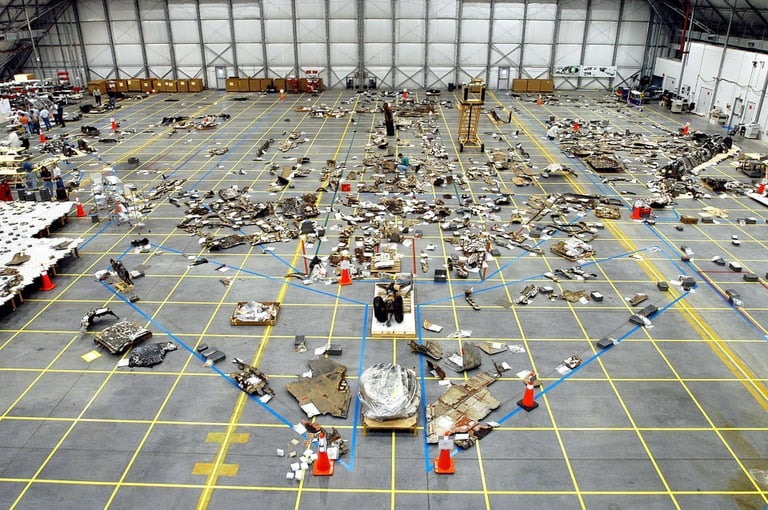
A
NASA hangar holds pieces of the space shuttle Columbia. Searchers,
including the FBI, recovered about 38 percent of the shuttle—more than
82,000 pieces weighing 84,800 pounds. Specialists at the FBI Laboratory
helped identify some of the serial numbers of the damaged tiles. Photo
courtesy of NASA
Fifteen years ago, on February 1, 2003, a sonic boom jarred Special
Agent Brent Chambers as he was preparing to mow his lawn outside of
Dallas on a chilly Saturday morning.
“I knew it was something
bad,” said Chambers, now retired. He jumped in his car, turned on the
police radio, and learned the news: NASA’s space shuttle Columbia
had broken up as it re-entered the atmosphere. The deep rumble, which
started just before 8 a.m. Central time, marked the explosive end of the
shuttle and the tragic death of all seven astronauts on board.
As the noise faded, debris started raining down into eastern Texas and western Louisiana.
No one knew immediately why Columbia
fell. But the nation couldn’t help but think about the 9/11 terror
attacks less than 18 months earlier. “It was a time when people were
concerned about terrorism, and it couldn’t be ruled out right away,”
said Michael Hillman, another FBI Dallas special agent.
Before
NASA could provide any answers, it needed to recover as much of the
shuttle as possible. More importantly, the crew needed to be found. The
Federal Emergency Management Agency coordinated the overall disaster
response, and tasked the FBI with finding, identifying, and recovering
the crew.