Friday, April 17, 2020

Imprimis - Thoughts on the Current Crisis; A Must Read

Larry P. ArnnLarry P. Arnn is the twelfth president of Hillsdale College. He received his B.A. from Arkansas State University and his M.A. and Ph.D. in government from the Claremont Graduate School. From 1977 to 1980, he also studied at the London School of Economics and at Worcester College, Oxford University, where he served as director of research for Martin Gilbert, the official biographer of Winston Churchill. From 1985 until his appointment as president of Hillsdale College in 2000, he was president of the Claremont Institute for the Study of Statesmanship and Political Philosophy. He is the author of Liberty and Learning: The Evolution of American Education; The Founders’ Key: The Divine and Natural Connection Between the Declaration and the Constitution; and Churchill’s Trial: Winston Churchill and the Salvation of Free Government.
_______________________________________________________

First a report about the College. Hillsdale’s campus is quiet, which it ought not to be, but also well. Our students were away for spring break when the coronavirus hit. We spent the week absorbing the news and making plans to bring them back, it being our job to have college. We found that we could not. Much of what I am writing here is shaped by this discovery: we did not have and could not get the tools and knowledge to do our work. And soon enough we were forbidden to do it by general fiat.

Spirits are good here, nonetheless. There have been many inspiring examples of service, good humor, and effort. I just finished a videoconference with the senior class officers to plan Commencement, which will be a grand celebration whether it is in May or later this summer. The seniors will arrive days early, dress up in their finery, and come over in groups for dinner at my house and sing and give toasts. Those are important rituals of friendship, and students have the same attitude as I: they will put up with absence and isolation, but resent it, and they will redouble their efforts to achieve the best things. They are determined to convert this disruption into an opportunity for excellence.

Meanwhile we are teaching our students online. We have learned a lot from producing online courses for the public over the past decade, and over two million citizens have taken one or more of them. Soon we plan to start a master’s degree program in classical education, and we will have an online component to that as well. But we lose something beautiful and irreplaceable when we are not in a classroom, and we regret very much these days having our students at a distance. There is a real loss in their absence, just as there is real loss everywhere in the nation. This loss is little measured or understood.

Financially the College is in good shape. We do not have much in the way of debt, and we keep a lot of cash around. We are cautious in our management of the College, and we are cautious with good reason. I have been president here for 20 years, and during that time we have had 9/11, the 2008 financial crisis, and now this. So we are pretty well prepared for whatever comes.

***

Sunday, April 12, 2020

From Behind Bars - Ending Mass Incarceration - Part 3


The Inside Story of How Prison Reform Got Done | Time
Pres. Trump signs "First Step Act"  Image from Time Mag.
Updated 3/24/24

By Michael Liebowitz

A Connecticut prisoner for some 25 years, Liebowitz was formerly housed at Osborn Correctional Institution in Somers, CT.  He has been a free man since November 2022.
Since his release, he authored "View from a Cage: My Transformation from Convict to Crusader for Liberty" and currently hosts the podcast, "The Rational Egoist".
Today, he and the love of his life, Melissa, need our help.  They haven't the resources to absorb the associated loss of income and the expenses that come from Melissa's cancer treatment.  Please consider making a ten-dollar donation to help Melissa, her son and Michael.  Donate here.
Along with Brett McCall, Liebowitz is also co-author of "Down the Rabbit Hole: How the Culture of Corrections Encourages Crime", available at Amazon.  Dr. Stanton E. Samenow, PhD reviewed the work in a 3/12/21 article in Psychology Today magazine.  In his review he writes, "I have found that Liebowitz and McCall are keen observers with a positive objective - to help others become more effective in helping people like themselves to change and become responsible human beings.  This book is definitely worth a read."
Liebowitz is also a regular guest with Todd Feinburg on WTIC AM 1080.  Podcasts of Todd's segments with Liebowitz can be heard, here.


Widespread Implementation of Evidence-Based Programs
          
Before delving into what I mean by “evidence-based programs”, I think it will be helpful to first briefly discuss the history of the idea that one of the purposes of prisons is to rehabilitate offenders.

          The penitentiary system was created in the late 18th century and came into prominence in the 19th.  From the beginning it was supposed that among the goals of incarceration was that of reforming the character of criminals.  Whether through the “silent system” as at New York’s Auburn prison, or the “separate system” at Pennsylvania’s Cherry Hill prison, it was thought that removing offenders from society, making them labor, intensively, and teaching them religion would get them to atone for their sins and alter their evil ways.

          By the late19th century it became clear that this model was failing, and changes were soon enacted.  Labor and religion were still very much part of the prison experience, but new reforms, such as indeterminate sentencing, were added to the mix.  While never fully implemented in practice, the idea of the indeterminate sentence was that there would be no specified period of time to which criminals would be sentenced.  Instead, they would be released when their actions demonstrated that they were ready for society; this was thought to provide offenders with the necessary incentive to reform themselves.

          Parole, probation, vocational education and rehabilitation programs developed in the early 20th century, making up what came to be known as the “rehabilitative ideal.”  Then in 1954 the American Prison Association became the American Correctional Association and prisons became “correctional institutions.”

          After approximately 70 years as the dominant idea in criminal justice, the rehabilitative ideal fell into disrepute.  The 1960s and 70s were turbulent times characterized by several high-profile assassinations, war, protests, and rising crime rates.  Many people lost faith in society’s ability to reform offenders.  A perfect storm was in place for what was perhaps the most significant blow against the rehabilitative ideal: Robert Martinson’s “nothing works” report.

A plethora of studies have shown that certain types of programs, when implemented properly, lead to significant reductions in recidivism.

Sunday, April 5, 2020

From Behind Bars - Ending Mass Incarceration, Part 2

ADECA - Juvenile Justice
Image from Alabama Dept. of  Economic Affairs
Updated 3/16/24

By Michael Liebowitz

A Connecticut prisoner for some 25 years, Liebowitz was formerly housed at Osborn Correctional Institution in Somers, CT.  He has been a free man since November 2022.
Since his release, he authored "View from a Cage: My Transformation from Convict to Crusader for Liberty" and currently hosts the podcast, "The Rational Egoist".
Today, he and the love of his life, Melissa, need our help.  They haven't the resources to absorb the associated loss of income and the expenses that come from Melissa's cancer treatment.  Please consider making a ten-dollar donation to help Melissa, her son and Michael.  Donate here.
Along with Brett McCall, Liebowitz is also co-author of "Down the Rabbit Hole: How the Culture of Corrections Encourages Crime", available at Amazon.  Dr. Stanton E. Samenow, PhD reviewed the work in a 3/12/21 article in Psychology Today magazine.  In his review he writes, "I have found that Liebowitz and McCall are keen observers with a positive objective - to help others become more effective in helping people like themselves to change and become responsible human beings.  This book is definitely worth a read."
Liebowitz is also a regular guest with Todd Feinburg on WTIC AM 1080.  Podcasts of Todd's segments with Liebowitz can be heard, here.


Widespread Implementation of Functional Family Therapy (FFT) and Multi-Systemic Therapy (MST)
Hold Juveniles Accountable
         
Perhaps the best way to reduce crime is to intervene in the lives of at-risk and delinquent youths to prevent them from becoming full-blown adult criminals.  Fortunately, there are two cost-effective programs that have been shown to reduce juvenile delinquency: Functional Family Therapy (FFT) and Multi-Systemic Therapy (MST).  Let’s look at each of these.
There is an abundance of evidence indicating familial relationships have a significant effect on both the formation and continuance of juvenile delinquency.  Thus, if the goal is to reduce such delinquency, it makes sense to target the entire family for intervention.  This is precisely what FFT does.
“[FFT] … is a structured, family-based intervention that uses a multi-step approach to enhance protective factors and reduce risk factors in the family.”  Addressed to medium-risk youths between 10 and 18 and to their families, it attempts to change the way family members communicate with one another and thereby improve relationships within the family.  The FFT therapist seeks to identify the “functions” a youth’s antisocial behaviors serve, as well as the functions the other family members’ problem behaviors serve and it attempts to show them how to satisfy these needs/wants with more productive behaviors.

Sunday, March 29, 2020

From Behind Bars - Ending Mass Incarceration, Part 1

How Connecticut became a model for prison reform | The Crime Report
Image from "The Crime Report"
Updated 3/8/24

By Michael Liebowitz

A Connecticut prisoner for nearly 25 years, Liebowitz is currently housed at Osborn Correctional Institution in Somers, CT.
Since his release, he authored "View from a Cage: My Transformation from Convict to Crusader for Liberty" and currently hosts the podcast, "The Rational Egoist".
Along with Brett McCall, Liebowitz is also co-author of "Down the Rabbit Hole: How the Culture of Corrections Encourages Crime", available at Amazon.  Dr. Stanton E. Samenow, PhD reviewed the work in a 3/12/21 article in Psychology Today magazine.  In his review he writes, "I have found that Liebowitz and McCall are keen observers with a positive objective - to help others become more effective in helping people like themselves to change and become responsible human beings.  This book is definitely worth a read."
Liebowitz is also a regular guest with Todd Feinburg on WTIC AM 1080.  Podcasts of Todd's segments with Liebowitz can be heard, here.

Introduction


I would argue that; strictly speaking, ending mass incarceration per se, should not be the goal.  Rather, what we ought to seek to accomplish is a significant reduction of criminal behavior.  After all, if we simply set out to eliminate mass incarceration as our primary goal it would be simple enough to achieve: just open the prison gates and release the bulk of the population.  I highly doubt, however, that this “solution” would be palatable to the general public.

The questions are:  Are there policies we can implement that will dramatically reduce crime and if so, what are they?  I firmly believe the answer to the first question is yes and the purpose of this plan is to articulate and propose such policies.  Crime reduction will undoubtedly require a bold and comprehensive plan.  And while due to my lack of resources I am unable to provide all the details I would like to (such as cost, for example), I still think my plan meets these criteria.

It consists of the following:

·        End the War on Drugs
·        Widespread Implementation of Functional Family Therapy (FFT) and Multisystemic Therapy (MST); Hold Juveniles Accountable
·        Widespread Implementation of Evidence-Based Programs
·        Widespread Implementation of Core Correctional Practices
·        Remunerate Correctional Officials and Employees Based on Results, i.e., Reduced Recidivism
·        Privately Fund a Significant Portion of Reform Programs

Let’s examine each of the plan’s components in turn.

End the War on Drugs

          I argued above that our primary goal ought not to be ending mass incarceration, but to reduce crime.  I pointed out the ease with which we could shrink the prison population by releasing prisoners en masse, but that the public would likely see this as undesirable.  There is one type of offender, however, who should be released and one type of crime that should be removed from the book: drug offenders and drug offenses.  These two reforms would by themselves significantly reduce the prison population.  Ending the “war on drugs”, however, would not only do this, but it would also reduce crime, and not just crimes related to sales and possession.

Saturday, March 14, 2020

Corona Virus Fear Spread by Politicians and Media


Image result for corona virus
Image courtesy of the CDC
There seems to be three groups of thought on the Corona virus.  Group One is in a state of panic, swallowing the hysteria put forth by conniving politicians and a complicit media, bent on destroying President Trump no matter what the cost to the people of the United States of America.  Their agenda takes precedence over all else.

Group Two might be a little skeptical; not really sure what to believe, but they are not taking any chances.

Then there is Group Three.  Those of us who see this for what it is; a manufactured crisis.  We don’t buy it.  We know that those infected experience mild symptoms for the most part and it passes, quickly.  We know that in many cases, especially in children, the symptoms are so mild as to go unnoticed.  We know that the recovery rate is very high; higher than that of the annual seasonal flu outbreak, which kills tens of thousands in the US, every year.  We know that the vast majority of those who died from the Corona virus (between 50 and 60), are elderly and have underlying respiratory conditions.

That said; very few minds can be changed, one way or the other.  You can’t argue with idiots or the gullible or the corrupt, so what is left to do?

I’m making a prediction.  It may not be 100% accurate but it will pan out, largely as I put it.

1)  Governors and mayors will continue to over react and close schools, casinos, sporting events, theatre performances, etc.  Even St. Patrick’s Day Parades!  NYC Mayor Bill De Blasio could shut down subways and other modes of public of public transportation.

Monday, March 2, 2020

“LIFE, LIBERTY, AND THE PURSUIT OF HAPPINESS”


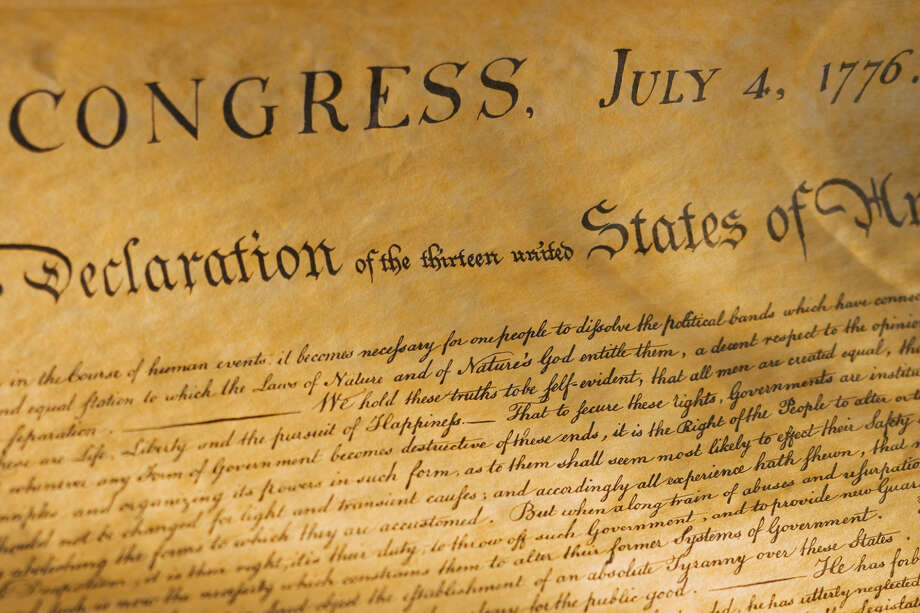
Image result for declaration of independence~These Unalienable Rights are in Peril~

A Hootedition: Hoot Gibson, 2-22-2020


July 4, 1776, “The Declaration of Independence,” second paragraph, first sentence:
"We hold these truths to be self-evident, that all men are created equal, that they are endowed by their Creator with certain unalienable Rights, that among these are Life, Liberty and the pursuit of Happiness."
Our Nation was founded on “certain unalienable Rights” which are:


> “life” … to not fear death from or by your Government,
> “liberty” … freedom and independence without Government suppression, and
> “pursuit of Happiness” … the ability to work at or work for self-satisfaction and self-esteem, without Government intervention or interference.

Nearly two hundred, forty-four years after declaring independence and fighting for these rights, “We the People” are experiencing the intentional one-by-one elimination of these Rights, placing all of our rights in peril. Liberal, Progressive, Anti-Constitutional, and Control-Lusting Politicians, along with small Special Interest Groups, aided and enabled by the Malevolent-Media, are hell-bent on destroying our Country’s foundation. The elimination of our Rights began quietly and covertly but now is blatantly overt.

Nowhere in the Declaration of Independence, in the U.S. Constitution, or in Amendments, is mentioned the Rights for:
> FREE College,
> FREE Healthcare,
> Open Borders,
> Democracy,

Tuesday, November 19, 2019

Don't Hire These Guys to Help You Move!


Image may contain: 1 person, sitting, beard and car  "Leave It For Us Moving and Storage"


Mike Philips (right) sent his nephew, Nate and another guy to do the move. He was not present. The guys scratched up numerous pieces of furniture, including an antique coffee table that was a wedding gift to my parents. They broke a piece from the armoire and put the broken piece in a drawer. They scratched the top of my desk and damaged other pieces of furniture. They turned a file cabinet on its side and dumped the contents, within. I had furniture blankets, but they did not use them all and neglected to use them where they were needed. They also damaged the toaster oven and a desk top digital clock/thermometer. There is still more to unpack, so who knows what else is damaged.


When I brought these things (and others) to Phillips' attention, he accused me of being a liar and trying to get a free move.

He also claimed, "Halfway through the move, the customer claimed to have lost the payment code, and wanted to cancel the move and pay us cash in order to save money and us make more by circumventing the % movinghelp receives." While I did lose the code, I never suggested canceling the move and circumventing the percentage received by Moving Help. I did pay in cash for the over-time.

I sent Philips several photos via text showing some of the damage. In the Resolution Center, he stated, "The pictures you provided clearly show damage that has been there for years and is not fresh." By text, he responded by saying, "Any further messages from you will be forwarded to my attorney, as this is clearly an attempt from you to receive a free move, same as you attempted by claiming to have lost the payment code during the move."

This is outrageous! The damage shown in the photos is clearly fresh. I also sent a picture the damage to the finish on a hutch that Nate had taped shut, and a photo of the tape. He responded by saying, again, that I was "grasping at straws in order to obtain a free move. They would never use tape on any wood furniture." Well, they did.


IT IS BAD ENOUGH THAT THEY DAMAGED MY FURNITURE, BUT TO DUCK RESPONSIBILITY BY LYING AND ACCUSING ME OF LYING AND TRYING TO GET A "FREE MOVE" IS OUTRAGEOUS!

Saturday, September 7, 2019

"Open-Carry Shopping Weekend" Planned Nationwide

Image result for store that are asking people not to open carry
Photo courtesy of NC Public Radio
Next weekend, September 13,14 and 15, marks the first annual "Open-Carry Shopping Weekend", in America. 
 
This event is in response to retailers such as Walmart, Kroger, CVS Walgreen (and likely others), who are now now asking law abiding citizens to no longer openly carry firearms while shopping in their stores.

The policy comes in the wake of a mass shooting at a Walmart in Texas and a mass shooting in Dayton's nightclub district, disappointing and angering many.  No one has yet to explain how an open-carry ban would have prevented the shootings, in question.

Organizers say the event is intended to remind retailers that the foundation of their customer base consists of law abiding gun owners who support the Second Amendment.

Participants are advised to make sure they are in compliance with any governing statues before carrying a firearm, anywhere.   Everyone is reminded that the purpose is to show businesses where their sales come from and that gun owner's business will effect their bottom line.   But most of all it is to show that gun owners are not a threat.   So, shop. Do your normal shopping, but shop.

And remember, you represent ALL other gun owners, so always be polite and courteous.

And remember, you represent ALL other gun owners, so always be polite and courteous.

Wednesday, May 15, 2019

Gun Fire Alleged to Have Disrupted Cell Service in Washington Court House

Image result for cell tower
Image from GovTech.com
The cell phone tower, located on N. North St. in Washington C.H. was out of service from Friday, May 10th, until today, Wednesday, May 15.  According to a source, the reason for the outage was discovered, today, while DP&L was running new power lines.  It seems, according to my source, the outage was caused by someone shooting into it!

The Metro/T-Mobile store, located across from Kroger, closed early on Saturday and did not open at all on Sunday (and perhaps Monday and Tuesday) out of concern for the safety of employees.  More than one person, upset over the loss of service, entered the store and became belligerent.

Five different cell phone provider were effected.  This, all according to sources.

If anyone has information about this, please contact the Fayette County Sheriff's Department at 740-335-6170.

Sunday, May 12, 2019

THE UNITED STATES CONSTITUTION

Image result for declaration of independence“Declaring Independence”
Hoot Gibson, 6/3/2014

The Declaration of Independence is the first time the Colonies referred to themselves officially as Free States. The newly proclaimed thirteen States had united in cause and committed to being independent from Britain. Written in the title of the Declaration is “…the thirteen united States of America.” This new designation of ‘States’ and “United States” carries forward to the title of the “Constitution of the United States” and most all other subsequent documents.

The document can be broken into six parts, though the original document appears to be one very long continuous paragraph. I recommend you read the Declaration of Independence after reviewing this article. It may give better insight to the structure and how the wording applies to later development of the US Constitution. http://www.constitution.org/us_doi.pdf

PART 1, Title: This section provides the date of the declaration and is a notice to the King that the decision to become independent was unanimous in Congress. It also is the first reference to “…united States of America.”

PART 2, Introduction: This portion proclaims the United States will separate from England.

PART 3, Declaration of Rights: This establishes that the United States is equal to England and explains the reasons for independence. The first sentence of this paragraph became much of the foundation and motivation for inclusions in the US Constitution.

 
“We hold these truths to be self-evident, that all men are created equal, that they are endowed by their Creator with certain unalienable Rights, that among these are Life, Liberty and the pursuit of Happiness.”

-life: living without the constant fear of death by other than natural means
-liberty: living without oppressive restrictions imposed by authority or tyranny
-pursuit of happiness:
--pursuit; unrestricted by authority, the ability to follow or go after…
--happiness; a sense of confidence and quality of life, not to suffer due to
government

PART 4, Grievances: The Founding Fathers include a long list of injustices and reasons for declaring independence from England.

PART 5, Resolution of Independence: The last two paragraphs state to the King that the United States of America will have its own powers to levy war, conclude peace, contract alliances [foreign nations], establish trade, and other acts as the United States…a separation nation.

PART 6, Signatures: There were 56 signers on the Declarations of Independence. As stated in the last sentence of the Resolution portion, each signer mutually pledged “…to each other our Lives, our Fortunes and our sacred Honor.”

The Declaration of Independence was approved by the Second Continental Congress on July 2, but dated and declared publicly on July 4, 1776. Though Thomas Jefferson is credited with writing the document; as a committee Thomas Jefferson, Benjamin Franklin, John Adams, Robert Livingston, and Roger Sherman were all authors of the document.

SUMMARY
The revolution for independence had already begun. This document, in essence, declared that the now United States is no longer a part of England and war will continue. During the Second Continental Congress, Benjamin Franklin made this statement regarding unity of the States and People, “We must all hang together, or assuredly we shall all hang separately.” Benjamin Franklin was the eldest signer of the Declaration of Independence and later a delegate to the Constitutional Convention in 1787, developing the US Constitution.

The Colonies are no longer colonies; they are now the United States of America. The Colonists are no longer colonists; they are now Americans.

©Hoot Gibson, 2014 - 2019


Hoot is a retired USAF Master Sergeant.